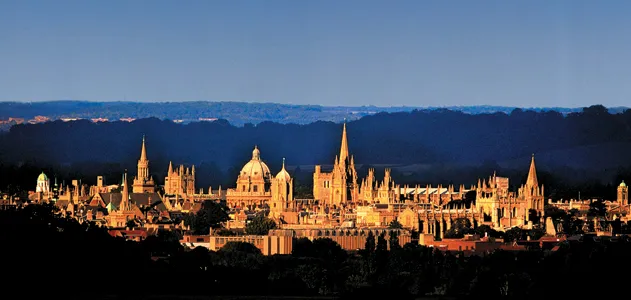
Academic pioneer and systems strategist, I have spent three decades shaping complex institutions with rigor, vision, and ethical purpose. From the University of Chicago to the spires of Oxford University, my path has been marked by intellectual discipline, institutional firsts, and a commitment to forms of exceptional leadership.
Behind every systems thinker lies first a foundation of values, rooted in a land shaped by history, dignity, and the idea of freedom.
Origins
Where Structure First Took Root
There are lands whose very existence constitutes an argument — against reduction, against erasure, yet for the celebrated narratives that history’s victors prefer. Haiti is such a land. Established as the only successful Revolution of enslaved people in modern history, the island nation stands as both a rebuke to colonial certainty and a living testament to the radical premise that dignity is not granted but claimed.
Citadelle Henri Christophe — a fortress of sovereignty.
It is from this soil — marked by the weight of history and the persistence of an idea of freedom older than most modern republics — that Ketlen Celestin’s intellectual formation first took root. Not as abstraction, but as inheritance. Not as ideology, but as lived epistemic architecture.
The Citadelle Henri Christophe, rising from the northern mountains, remains one of the most extraordinary feats of post-colonial engineering in the Western Hemisphere — a fortress built by free hands and even freer imagination, designed not for conquest but for the preservation of a sovereignty that the world refused to recognize. It speaks, in stone and in silence, of a people who understood that freedom, once seized, must be systematically defended.
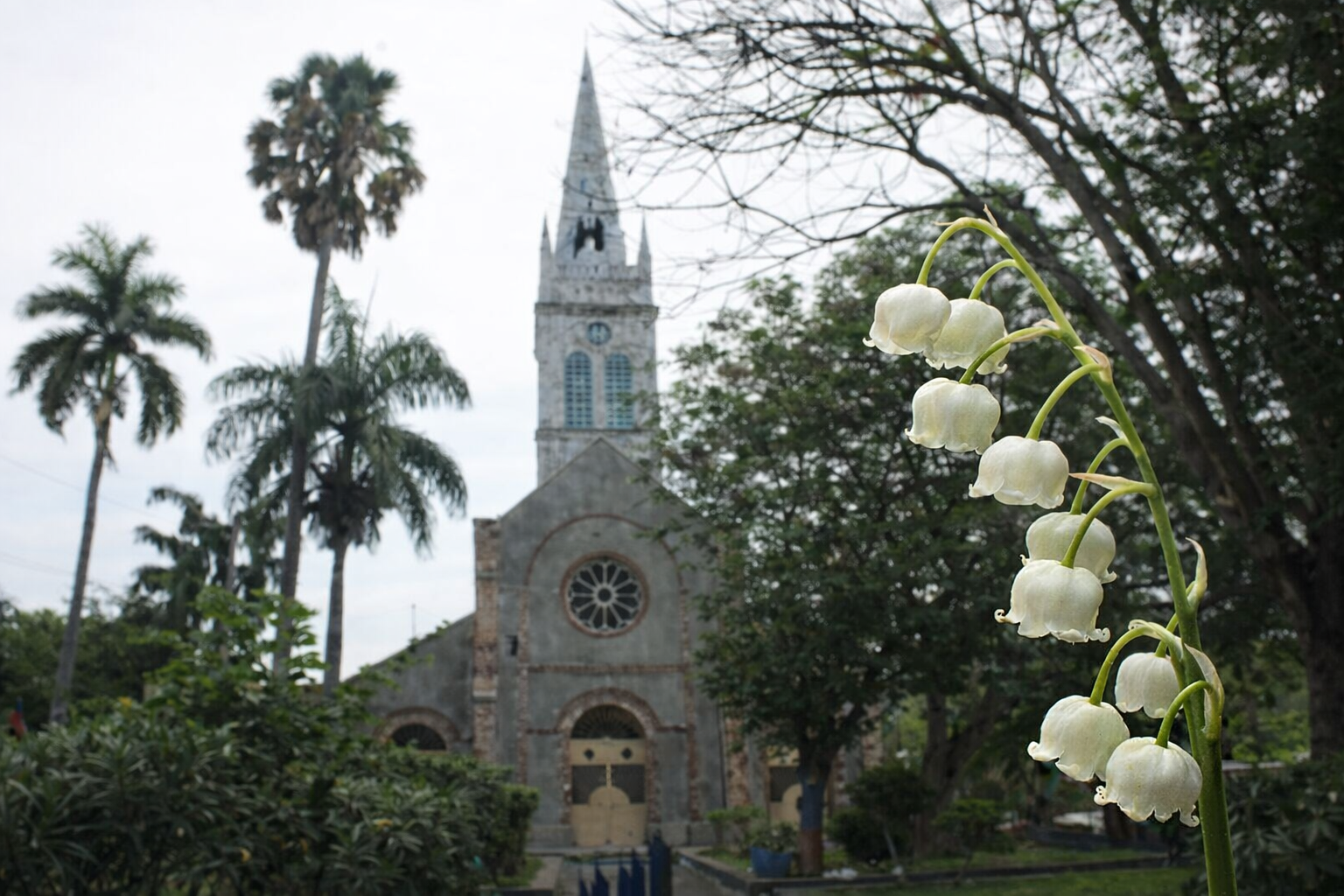
Notre-Dame-du-Perpétuel-Secours, Cavaillon — maternal anchor, lilies of memory.
In Cavaillon, in the southern reaches of the country, the Église Notre-Dame-du-Perpétuel-Secours has stood for generations as a quiet anchor of community, faith, and maternal lineage. It is a place where memory is not archived but lived — passed from mother to daughter in gestures, prayers, and the unspoken grammar of family continuity. For those who know how to read such markers, The place of the Caimans and of Champions situates not merely a geography but a genealogy: of Taino indigeneity and a line of women whose presence in this place stretches back further than most written records dare to account for.
To be born in Haiti is not to originate from unprecedented historical greatness. It is to come from a philosophical tradition — one that understood, before the Enlightenment formalized the notion, that systems of governance must be interrogated, that structures must serve the governed, and that the act of building nations and institutions is itself an act of moral imagination.
This is the foundation upon which everything that follows was built.
From this consciousness of dignity and structures was born an intellectual quest: to understand the forms of knowledge and authority within great institutions.
Biography
Leadership Philosophy
Ketlen Celestin
Ketlen Celestin’s leadership is defined by a career-long commitment to decoding complex structures and translating them into ethical governance. She integrates historic precedence with modern-day incentives to drive systemic impact with intellectual rigor. As a pioneering faculty member at several institutions, from private enclaves for the elites to urbane city backdrops to the storied spires on distant shores, she established an uncommon leadership that requires translating institutional authority into actionable policy for emerging leaders shaping the global good.
She believes in the strength of institutional firsts to set the educational and structural vision for future growth. Whether serving as the youngest faculty member in a department or breaking glass ceilings as the first Black woman to lead a campus-wide executive cohort, her approach remains the same: balancing qualitative judgment with high-stakes institutional priorities as an institutional architect and systems strategist.
Vanitas — a memento of impermanence.
For that imperative, Ketlen Celestin is trusted. Her work as a global knowledge architect demonstrates an ability to formally structure international policy with sustainable infrastructure, while her reputation as an early academic adapter of visionary pedagogy attuned her to what is necessary as well as what is next.
The philosopher’s stone — emblem of a life in philosophy.
At the core of Ketlen Celestin’s philosophy is epistemic authority. Her doctorate from the University of Chicago was on how systems encode strategic instability by wielding existential doubt, which has informed her ability to advise high-level steering committees on risk and institutional communication, and faculty development. Leading through Socratic Inquiry and disciplined imagination, she opens the analytical space essential to test assumptions and reveal gaps in knowledge and blinding assumptions. In our increasingly complex sociotechnical systems, verifying truth and ensuring human-centered judgment are critical to civilizational governance.
This vision of institutional architecture did not stop at theory. It took shape, over three decades of historic firsts, in roles marked by rigor, boldness, and a commitment to transmission.
Accomplishments
A Record of Firsts
Ketlen Celestin’s leadership philosophy, established during a period of outstanding early professional triumphs, is marked by youthful panache, pioneering firsts, and ethical boldness, setting a standard that would define a three-decade career as institutional architect, systems strategist, and intelligence analyst.
The Governor’s Academy — oldest boarding school, New England.
She began as a pioneering faculty member in the English Department at The Governor’s Academy, the oldest boarding school in New England, integrating historic educational rank and precedence with modern universal values for systemic societal impact and intellectual rigour, and translating complex structures into ethical governance for emerging institutional leaders.
Suffolk University — alma mater, earliest teaching platform.
As an elite faculty appointee at her alma mater, Ketlen Celestin became the youngest member of the Suffolk University English Department to lead seminars in literature and philosophy, in whose international honor society, Phi Sigma Tau, she was inducted into membership. Previously, she broke another historical barrier while a coed when she led the Council of Presidents as the first Black woman to hold the Vice Chair position, with executive leadership over campus-wide initiatives.
Boston, Massachusetts — a first horizon of possibility.
The role garnered her the annual Outstanding Vice Chairperson of the Year award. Recruited from Suffolk Boston abroad to Suffolk-Dakar as an international education architect, she was involved in formally structuring the education policy and experiential learning infrastructure for the university’s West African campus, where she helped advance a full-immersion multinational pedagogy rooted in New England history with cosmopolitan ambition, thereby building her authority as an early academic adapter of Suffolk University’s vision of educational diplomacy and as a professional adept in global knowledge systems.
Dakar, Senegal — a horizon of multinational pedagogy.
Since the beginning of her leadership trajectory as a master pedagogue, Ketlen Celestin has sustained a civic-minded worldview to shape future generations. Over decades, she engineered and evaluated science-backed, differentiated instructional designs for student-focused and learner-informed complex theory acquisition, calibrated for measurable success outcomes — preparing many for careers in business, government, medicine, and the home, including empowering middle schoolers through mastery of literacy and rhetoric. She understands well that knowledge of these two foundations at an early age has lifelong primacy in all endeavors involving agency, governance, and sovereignty.
Elected Commencement speaker by the student body to establish the oratorical tradition for a new institution’s first graduation remains one of the proudest professional accomplishments for Ketlen Celestin.
Oxford, England — the Great Books, dreamt since childhood.University of Oxford — Teacher-Scholar in the Humanities.
Amid the growing professional accolades and educational attainment, few have been as spectacularly validating as the invitation to read literature at Oxford University as a Teacher-Scholar in the Humanities. Met with bittersweet aplomb, Ketlen Celestin’s first childhood dream to study the Great Books at Home in Europe had come to pass; indeed, it was a career milestone done in the eloquent silence where her late Lord Mentor, who recognized her talents and developed her intellect, would have celebrated along with her. His life of the mind as a theologian-philosopher in the Catholic Intellectual Tradition is the basis for hers.
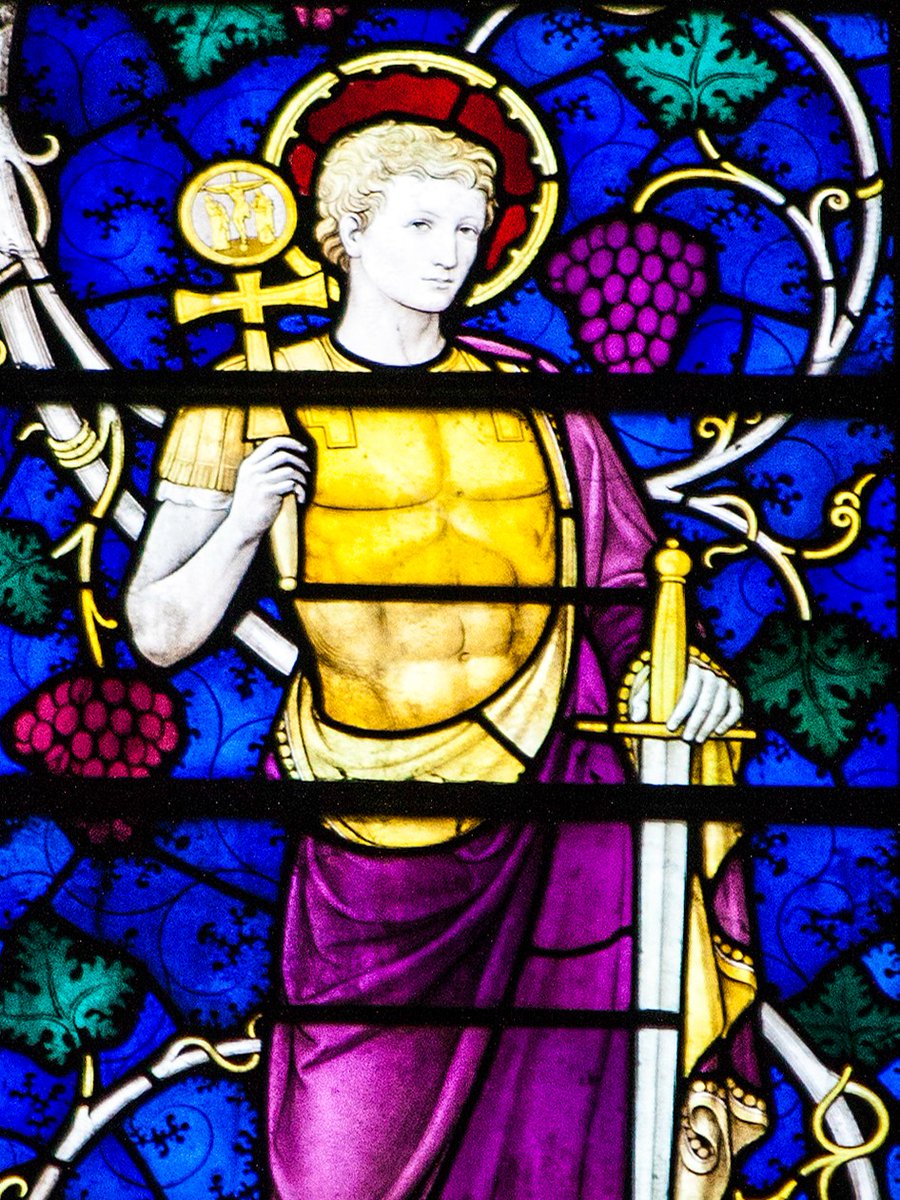
Saint Alban — mentor’s confirmation, England’s patron.University of Chicago — doctoral research on epistemic risk.
During her tenure at The University of Chicago, Ketlen Celestin pioneered original doctoral research on epistemic risk and the role of all institutions in encoding existential instability. She leveraged this expertise as a strategic consultant in collaborating with high-level steering committees to shape qualitative judgment and to direct institutional priorities and hiring decisions. The Academy has been insightful in how to synthesize complex philosophical data on large-scale sociological phenomena.
If the past is a future indicator and success leaves clues, then as Ketlen Celestin begins anew as an academic business owner, it is not with an empty slate. She is creating yet another legacy.
Behind these international distinctions, however, lies an older memory: that of a maternal transmission, an eternally sacred wheelhouse where knowledge was first a language of the heart and the spirit before becoming a form of intellectual rigor.
Foundational Archive
The First Day
The foundational archive — a threshold to formal knowledge.
This photograph precedes all credentials, all institutional firsts, all the careful architecture of a career built across continents and decades. It is the photograph of Ketlen Celestin’s first day of school — a child standing at the threshold of formal knowledge, carrying in her girlhood posture something that the camera captured but could not yet name.
Every intellectual journey has a genesis that is not academic. Before the University of Chicago, before Oxford’s spires, before the seminars and the policy frameworks, there was this: a morning, a threshold, and the quiet conviction — transmitted not through syllabi but through the steady, deliberate act of a mother preparing her daughter for a world that would not always be prepared for her.
This image forms the incipient document in the foundational archive of this site — not because it chronicles an achievement, but because it captures the moment where achievement became possible. It is the visible trace of an invisible transmission: the transfer of discipline, of expectation, of the belief that knowledge is not a privilege to be received but a sovereignty to be built and protected.
The origin before the origin — luminous, idealistic youth.
Beside this archive rests another presence — a young woman, Ketlen Celestin’s mother, photographed in the fullness of her youth, carrying the luminous idealism of someone who did not yet know how the world would receive her and her daughter’s dreams. She is the origin before the origin. The source of a lineage that stretches, through Cavaillon and its church, through six generations of women whose names may not all be recorded but whose imprint is indelible.
Positive Vanitas — beauty fades, life remains.
The candle of the Candlemaker remains lit. Not as metaphor, but as practice — the quiet discipline of remembrance, the refusal to let memory become merely historical. Some inheritances are not spoken. They are kept burning. With heart and mind still on fire.
The candle maker’s light — still shines.
From this received heritage is born a responsibility: to think with rigor, to guide with discernment, and to contribute to global futures where the human remains at the center.
Vision
“The Architecture of Knowledge Continuity”
The most consequential systems are those that outlast their constitutional architects. After three decades decoding the mechanics of governance and institutions, one conviction remains: governance without ethics is merely administration.
In an era of accelerating complexity, the challenge is no longer performance, but trust. My vision operates at this intersection: where epistemic rigor meets institutional imagination. It is the disciplined work of ensuring that the structures we build today are strong enough to bear the weight of the futures we wish those who follow will inherit.
This is a deliberate act of transmission. The library extends in all directions; the work continues.
Ketlen Celestin
If this vision resonates with your own commitments to open dialogue, let’s start a conversation.
Contact
Let’s talk
Ketlen Celestin is available for advisory consultations on institutional strategy, governance, and epistemic risk, for keynote conferences on leadership and the architecture of knowledge, and for bespoke speaking engagements in academic, civic, and corporate forums.








 Phi Sigma Tau, she was inducted into membership. Previously, she broke another historical barrier while a coed when she led the Council of Presidents as the first Black woman to hold the Vice Chair position, with executive leadership over campus-wide initiatives.